
When Does Postpartum Hair Loss Start? The Timeline Every New Mom Needs
April 13th, 2026
Dr James Kilgour, MD
This article is for you if...
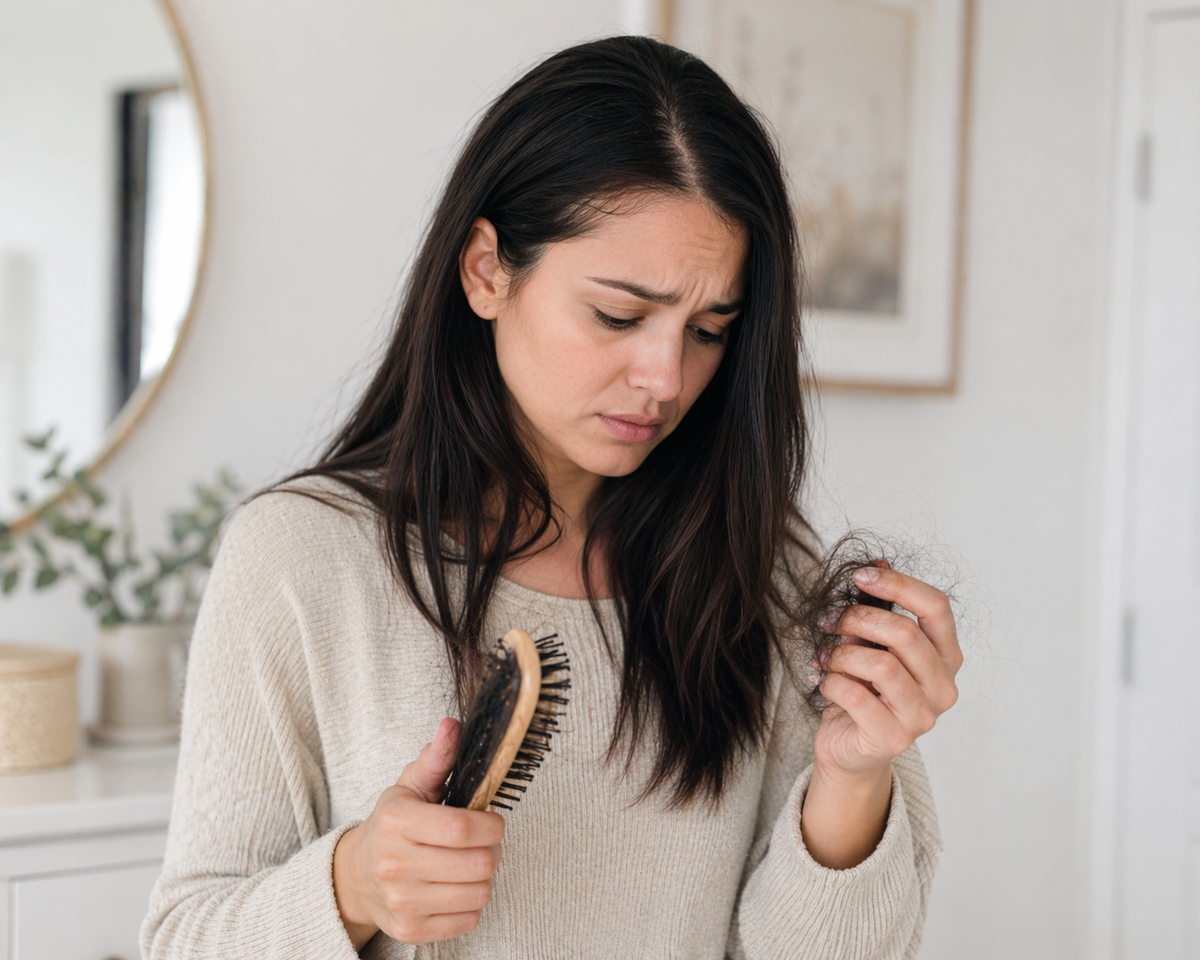
If you’ve recently welcomed a baby into the world, you’re likely navigating the whirlwind of the postpartum period, filled with sleepless nights, diaper changes, and a newfound sense of awe. But then, one morning, you notice something unsettling: your shower drain is clogged with hair, and your brush looks like it’s been through a windstorm.
Panic is a natural response, but here is the truth you need to hear right now: you are not going bald. What you are experiencing is a physiological rite of passage known as postpartum telogen effluvium. It is temporary, it is predictable, and it is a sign that your body is recalibrating through significant hormonal changes after the monumental task of growing a human being. Understanding the timeline of this shift and how long this hair loss lasts won’t stop the shedding, but it will give you the peace of mind to navigate it without fear.
The Reality of Postpartum Shedding: Why It Happens and Why You’re Not Going Bald
The sight of clumps of hair falling out can feel like a secondary trauma after the intensity of childbirth. However, it’s important to distinguish between "hair loss" and "hair shedding." True hair loss often involves follicles dying or being damaged. Postpartum shedding, conversely, is simply a massive, synchronized "reset" of your natural hair growth cycle.
Think of your scalp as a garden. Usually, the flowers bloom and wither at different times, so the garden always looks full. During pregnancy, your hormones act like a high-powered fertilizer that keeps every single flower in a state of permanent bloom. Once the baby arrives, that fertilizer is withdrawn, and all those flowers that were supposed to wither months ago finally do so all at once. It feels like the garden is dying, but in reality, the soil is just preparing for a fresh season of growth.
Understanding the Science of the "Pregnancy Glow" vs. The Postpartum Shed
To understand why the shed happens, we have to look at the biological grace period you enjoyed while pregnant. Your hair goes through three distinct phases: growth (anagen), transition (catagen), and rest/shedding (telogen).
The Anagen Phase: How Pregnancy Keeps Your Hair Growing
In a non-pregnant state, about 85% to 90% of your hair is in the anagen phase at any given time. This phase lasts for years. However, when you’re pregnant, your estrogen levels skyrocket. This hormonal surge acts as a protective shield, effectively "freezing" your hair in the anagen phase.
This is why many pregnant women experience the legendary "pregnancy glow." Your hair feels thicker, shinier, and more voluminous not because you are growing more hair, but because you aren't losing the 50 to 100 strands you would normally shed every single day. You are essentially hoarding hair for nine months.
The Telogen Phase: The Sudden Shift After Delivery
Once you deliver your baby and the placenta, your estrogen and progesterone hormone levels plummet almost instantly. This hormonal "crash" sends a signal to your hair follicles that the party is over.
The hairs that were held in the growth phase by pregnancy hormones are suddenly pushed into the telogen (resting) phase. Once a hair enters telogen, it sits in the follicle for about three months before finally falling out to make room for new growth. This is why you don’t see the shedding the moment you leave the hospital; there is a biological delay built into the system.
When Does Postpartum Hair Loss Start? The Typical Timeline
While every woman’s hormonal profile is unique, the biological clock of hair shedding follows a remarkably consistent pattern. Knowing what to expect each month can help you feel like you’re in control of the process rather than a victim of it.
The First Few Months: The Calm Before the Shed
During the first 8 to 12 weeks postpartum, your hair might still look fantastic. You may even wonder if you’re one of the "lucky ones" who will skip the shedding phase entirely. Behind the scenes, however, the shift has already happened. The hairs are resting, disconnected from their blood supply, just waiting for the internal cue to depart. Enjoy this period, but don't be caught off guard when the transition begins.
The Peak: Months Three to Six
This is the window where most women notice the "dreaded shed." Usually starting around the three-month mark, the shedding can be intense. You’ll find hair on your pillow, on your baby’s clothes, and throughout the house. For most, the peak of this shedding occurs around month four.
It is during this time that you might notice your ponytail feeling significantly thinner or your hairline appearing more sparse, as hair thinning becomes most apparent around the temples. This is the "reset" in full swing. It feels aggressive because you are losing months' worth of hair in a matter of weeks.
The Turning Point: Six to Twelve Months
By the time your baby is six months old, the rate of shedding should begin to taper off. Your hormones are stabilizing, and the "extra" hair from pregnancy has mostly cleared out. By the twelve-month mark, most women find that their hair has returned to its pre-pregnancy density. You will start to see the "halos" of new growth—those short, fuzzy baby hairs that stick straight up at the hairline—which are the victorious signs that your follicles are back in the growth business.
Is Your Hair Loss Normal? Knowing the Difference Between Shedding and Thinning
While postpartum shedding is standard, it is important to differentiate it from other conditions that might require medical intervention.
Signs of Typical Postpartum Shedding
Standard shedding is characterized by hair falling out from all over the scalp rather than in specific, localized patches. You’ll notice it most when manipulating the hair—washing, brushing, or running your fingers through it. The hair that falls out will have a small white bulb at the end, indicating it was in the telogen phase and fell out naturally.
Red Flags: When to Consult a Doctor
If you experience any of the following, it may be time to speak with a healthcare provider or a dermatologist:
-
Patchy Baldness: If you see perfectly smooth, circular bald spots, this could be Alopecia Areata, an autoimmune condition.
-
Scalp Irritation: Excessive itching, redness, or scaling alongside hair loss is not typical of postpartum shedding.
-
Extreme Fatigue or Mood Swings: Postpartum thyroiditis or iron deficiency (anemia) can both mimic or exacerbate hair loss. If you feel "off" beyond just being a tired new mom, a simple blood test can check your thyroid (TSH) levels and ferritin (iron storage).
Managing the Shed: Practical Tips for Daily Hair Care
You can’t stop the hormonal shift, but you can change how you treat your hair during this fragile window to minimize breakage and maximize the hair you have left.
1. Rethink Your Washing and Styling Routine
When hair is in the telogen phase, it is held loosely in the follicle. Aggressive scrubbing during a shampoo or vigorous towel-drying can pull out hairs that might have stayed in place for a few more days. Switch to a volumizing shampoo and conditoner made for thinning hair, which are formulated to be lighter and won't weigh hair down, making it appear fuller.
2. Be Gentle with "Mom Bun" Tension
The "mom bun" is a survival staple, but tight elastics can cause "traction alopecia"—loss caused by constant pulling. This is particularly dangerous for the fragile hairs around your temples that are already struggling. Use silk or satin scrunchies instead of rubber bands, and try to wear your hair down or in a loose braid whenever possible.
3. The Power of a Strategic Haircut
Sometimes, the best way to handle thinning ends is to take them off. A shorter, blunt cut can make hair look significantly thicker. Layers can also add movement and volume, disguising the areas where density has decreased. Many women find that a "postpartum chop" not only helps the hair look better but also reduces the weight of the hair, putting less strain on the follicles.
Nourishing Your Hair from the Inside Out
Your body prioritizes your baby’s needs and your own recovery over the luxury of long hair. To encourage your hair to return to its growth phase, you need to ensure your internal "pantry" is well-stocked.
Continuing Your Prenatal Vitamins
Many doctors recommend staying on your prenatal vitamin for at least six months postpartum, especially if you are breastfeeding. These vitamins contain a balanced blend of the nutrients your body needs to rebuild tissue. It’s much easier to maintain your nutrient levels than to try and "catch up" once specific nutritional deficiencies have set in.
Key Nutrients for Hair Recovery: Iron, Zinc, and Biotin
-
Iron: Low iron is one of the most common causes of prolonged hair shedding. If you lost a significant amount of blood during delivery, your iron stores may be depleted.
-
Zinc: This mineral plays a crucial role in hair tissue growth and repair.
-
Biotin: While not a miracle cure, Biotin (Vitamin B7) helps produce keratin, the protein that makes up your hair.
The Role of Stress and Sleep in Hair Health
It’s almost comedic to tell a new mother to "stress less and sleep more," but the physiological impact of cortisol (the stress hormone) on hair follicles is real. Chronic stress can push even more hair into the resting phase. While you can't force a baby to sleep through the night, try to find small windows of "nervous system reset"—five minutes of deep breathing or a warm bath can help lower cortisol levels and signal to your body that it is safe to invest energy back into hair growth.
Postpartum Hair Treatments: What Actually Works?
The market is flooded with products promising to "stop hair loss," but when dealing with hormones, you have to be discerning.
Volumizing Products vs. Growth Serums
Volumizing sprays, mousses, and "thickening" shampoos work by coating the hair shaft with polymers to make each strand appear thicker. These are excellent for aesthetic management, but not true regrowth. Growth serums support the new growth coming in by preparing the scalp for optimal performance.
Scalp Massages and Circulation
A simple, free way to support your hair is a daily scalp massage. Using your fingertips (not nails) to gently move the skin of your scalp increases blood flow to the follicles. This ensures that the new "baby hairs" have plenty of oxygen and nutrients to grow strong from the start.
Understanding the Limits of "Quick Fix" Supplements
Be wary of "hair growth gummies" that promise overnight results. Most of these are just expensive multivitamins. If you are already eating a balanced diet and taking a prenatal, adding extra supplements likely won't speed up the process. Your hair grows at an average rate of half an inch per month; no supplement can magically double that speed.
A Note on Self-Care and Patience During the Transition
Postpartum hair loss is more than just a physical change; it’s a reminder of how much your identity has shifted. It’s okay to feel sad about it. It’s okay to miss your thick pregnancy hair. But remember that your body has just performed a miracle. It has reconfigured its entire chemistry to create life.
The shedding is a temporary side effect of your body returning to its "home base." Give yourself grace. Your hair will return, your energy will fluctuate, and eventually, this season of clogged drains will be a distant memory.
Summary: Your Postpartum Hair Journey at a Glance
-
Timeline: Shedding usually starts at 3 months, peaks at 4 months, and resolves by 12 months.
-
Cause: A sudden drop in estrogen causes "hoarded" pregnancy hair to enter the shedding phase all at once.
-
Management: Use volumizing products, avoid tight hairstyles, and keep up with your nutrition.
-
When to worry: See a doctor if you have patchy bald spots, scalp sores, or extreme lethargy.
-
The Outlook: It is entirely temporary. Your follicles are healthy; they are simply resting.
This journey is a marathon, not a sprint. By understanding the "why" and the "when," you can stop stressing about the hair in the brush and start focusing on the incredible person you’ve brought into the world. Your hair will catch up—just give it time.