
Does Biotin Actually Grow Hair? Separating Science from Hype
April 10th, 2026
Dr James Kilgour, MD
This article is for you if...
Walk into any pharmacy or scroll through a social media feed, and you’ll inevitably encounter the "holy grail" of the beauty aisle: Biotin. Packaged in sleek bottles, often formulated as neon-colored gummies, these supplements promise to transform thinning strands into a cascading mane. It is the darling of the wellness and hair care industry, fueled by influencers and a global desire for thicker, stronger, and healthy hair.
But if you are standing there with a bottle in your hand, wondering if this is a legitimate scientific breakthrough or just expensive urine in the making, you aren’t alone. The disconnect between marketing claims and clinical reality is vast. To understand if biotin actually grows hair, we have to look past the glossy labels and dive into the cellular machinery that builds your hair from the inside out.
The Biotin Boom: Why Everyone is Talking About Vitamin B7
The obsession with biotin didn’t happen in a vacuum. It is the result of a perfect storm: a nutrient that is genuinely essential for life, a population increasingly stressed (which impacts hair health), and a supplement industry that excels at selling hope. We’ve become a culture looking for the "magic pill" for aesthetic concerns, and biotin, with its clean image among dietary supplements and B-vitamin pedigree, fits the bill perfectly.
What exactly is biotin?
Biotin, also known as Vitamin B7 or Vitamin H (the ‘H’ appropriately stands for Haar und Haut, the German words for hair and skin), is a water-soluble vitamin that acts as a coenzyme in the body. Think of it as a specialized worker in your body’s metabolic factory. Its primary job is to help enzymes break down fats, carbohydrates, and proteins from the food you eat and turn them into energy.
Because it is water-soluble, your body doesn't store it in large reserves. Whatever your body doesn't use is typically flushed out through your system. It is found naturally in a wide variety of foods—egg yolks, sweet potatoes, legumes, nuts, and seeds—and is also produced by the "good" bacteria living in your gut. Under normal circumstances, the human body is remarkably efficient at recycling its existing biotin supply, making it a nutrient we rarely run short on.
The Biology of Hair Growth
To understand why people link biotin to hair, we have to look at the construction site of the human scalp. Hair isn't just "there"; it is a complex structure of proteins being manufactured at a rapid pace.
How biotin interacts with keratin
The "hero" protein of your hair is keratin. Keratin is a tough, fibrous structural protein that makes up your hair, nails, and the outer layer of your skin. This is where the biotin connection originates. Biotin plays a crucial role in the production of keratin by assisting in the synthesis of amino acids, which are the building blocks of proteins.
Imagine your hair as a brick wall. Keratin is the brick, and biotin is part of the machinery that ensures the bricks are manufactured correctly and delivered to the construction site. Without the metabolic processes that biotin supports, the "factory" slows down, and the bricks might become brittle or stop being produced altogether. This biological link is the foundation of the claim that more biotin equals more hair, but do the benefits of biotin extend to those without a clinical deficiency? However, as we will see, having enough machinery to build a wall is not the same thing as building a taller wall just because you bought extra machines.
The three stages of the hair follicle cycle
Hair growth is not a continuous, endless process. Every single hair on your head is currently in one of three distinct phases, operating on its own internal clock:
-
Anagen (The Growth Phase): This is the active phase where cells in the root of the hair are dividing rapidly. A new hair is formed and pushes up the shaft. This phase usually lasts between two and seven years.
-
Catagen (The Transition Phase): This is a short, two-to-three-week stage where growth stops and the outer root sheath shrinks and attaches to the root of the hair.
-
Telogen (The Resting Phase): This lasts about three months. At the end of this phase, the hair falls out and is replaced by a new hair in the anagen phase.
For biotin to "grow" hair, it would need to fundamentally alter this biological clock or increase the rate of cell division at the root.
Does Biotin Actually Grow Hair? Examining the Science
When we move from the theory of "what biotin does" to the evidence of "what biotin supplements do for healthy people," the narrative shifts significantly.
The "Gold Standard" research: What the studies say
If you look for robust, double-blind, placebo-controlled clinical trials—the gold standard of science—that prove biotin grows hair in healthy individuals, you will find a surprisingly empty library.
A comprehensive review of 18 reported cases of biotin use for hair and nail changes, published in Skin Appendage Disorders, found that every single patient who showed improvement already had an underlying clinical deficiency or a genetic condition like "uncombable hair syndrome."
In other words, the science suggests that biotin is excellent at restoring hair growth and supporting hair regrowth in people who are lacking the vitamin, but there is virtually no evidence that it boosts hair growth in people who already have adequate levels. It’s like a car’s engine oil: if you’re bone dry, adding oil will make the car run again. But if your oil is already at the "full" line, adding five more quarts won't make the car go faster—it will just cause a mess.
The distinction between hair growth and hair quality
One reason for the confusion is the blur between "growth" and "quality." While biotin hasn't been proven to increase the number of hairs on your head or the speed at which they grow, some small-scale studies suggest it might improve the infrastructure of the hair you already have, whether taken orally or applied via a serum. By supporting the keratin infrastructure, much like a topical conditioner, biotin may help reduce hair breakage. If your hair breaks less at the ends, it appears to grow longer and look thicker over time. This is "length retention," not "growth stimulation," but to the average consumer looking in the mirror, the result looks the same.
Why anecdotal evidence is so convincing (and potentially misleading)
"But my friend took it and her hair grew three inches in a month!" This is the common refrain. Anecdotal evidence is powerful because it’s personal and visible, but it often ignores the variables.
Most "hair, skin, and nails" vitamins aren't just biotin. They usually contain zinc, vitamin C, iron, and folic acid. If a person was slightly iron deficient (a very common cause of hair thinning), the iron in the supplement might be doing the heavy lifting while the biotin gets the credit.
Furthermore, hair health is deeply tied to stress and diet. If someone starts taking a supplement, they often simultaneously start eating better or practicing more self-care, leading to a "placebo-plus" effect where the supplement is just one of many factors contributing to better hair.
The Reality of Biotin Deficiency
Since biotin only seems to work for those who are deficient, the million-dollar question is: are you deficient?
How common is a true deficiency?
In the developed world, true biotin deficiency is exceedingly rare. Our bodies require only a tiny amount (the recommended daily biotin intake for adults is 30 micrograms per day), and our gut bacteria are surprisingly good at manufacturing what we don't get from food.
Because biotin is found in so many common foods—even a single cooked egg provides about 10 micrograms—most people exceed the daily requirement through a standard diet without even trying.
Physical signs your body needs more Vitamin B7
A deficiency isn't subtle. If your body is truly starving for biotin, hair thinning is just one symptom. Other signs, such as skin rashes, include:
-
A characteristic red, scaly rash around the eyes, nose, and mouth.
-
Brittle nails that split or chip easily.
-
Neurological symptoms like lethargy, hallucinations, or numbness and tingling in the extremities.
-
Chronic fatigue.
If you have thick nails and clear skin but your hair is thinning, a biotin deficiency is statistically unlikely to be the culprit.
Why "more" isn't always better for healthy individuals
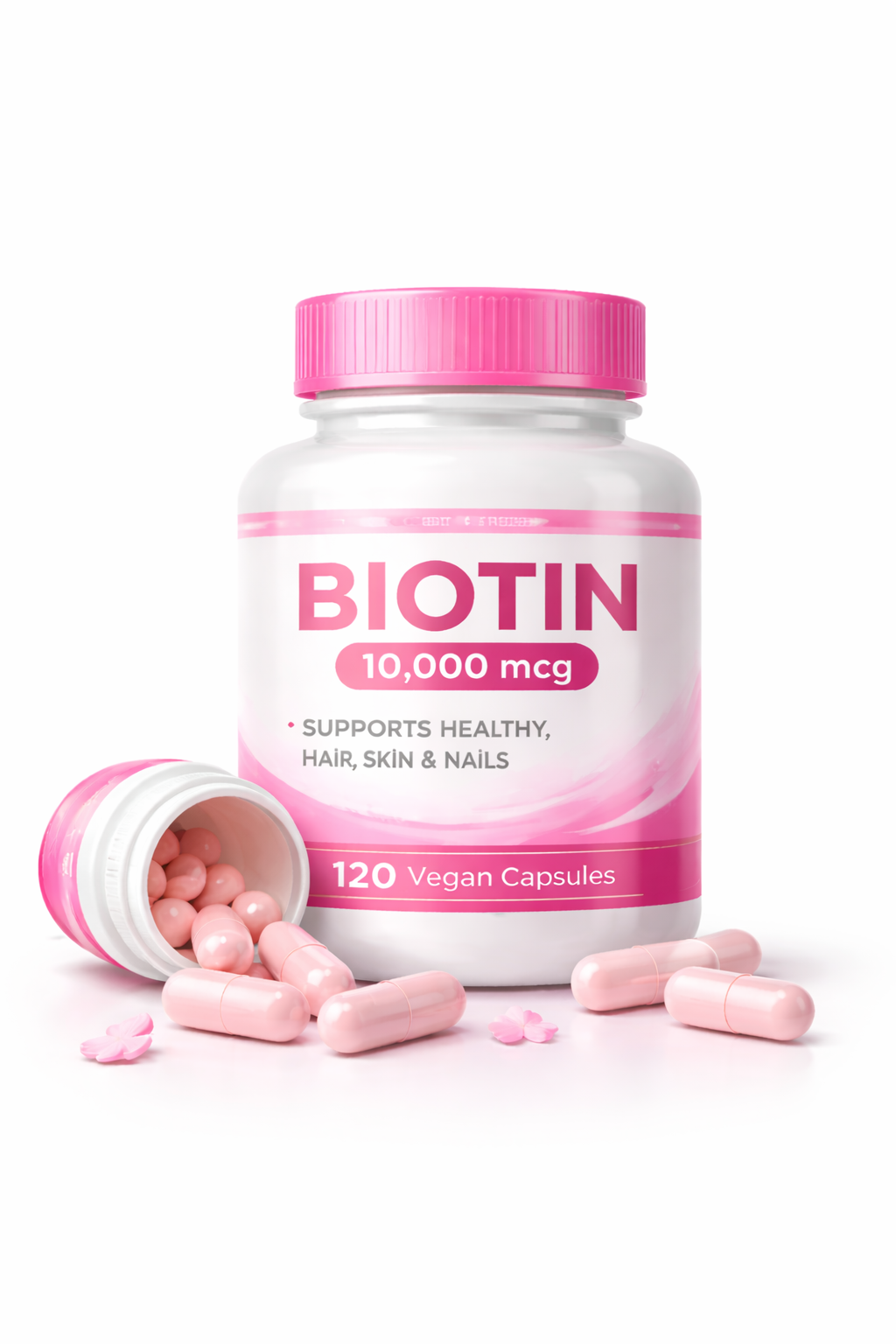
The "more is better" philosophy is a staple of the supplement industry, but biology doesn't work that way. Because biotin is water-soluble, your kidneys are tasked with filtering out the excess. Taking too much biotin, such as 10,000 mcg (a common supplement dose) when you only need 30 mcg, is essentially asking your organs to process 333 times the required amount. This doesn't lead to "super" hair; it leads to metabolic waste.
Expert Opinions: What Dermatologists and Trichologists Think
The professional community is largely skeptical of the biotin craze, though they aren't entirely against it.
The consensus on over-the-counter supplements
Most dermatologists, including members of the American Academy of Dermatology, view biotin as a low-risk, low-reward intervention. Dr. Shani Francis, a board-certified dermatologist, has noted in various medical forums that while biotin is safe, it’s rarely the "fix" for hair loss. The consensus among trichologists (scalp specialists) is that if you have a healthy, varied diet or a balanced diet, a biotin supplement is likely unnecessary. They often point to more common culprits for hair loss and pattern baldness, such as iron deficiency (anemia), thyroid imbalances, or hormonal changes like androgenetic alopecia (AGA), which a B-vitamin cannot fix.
When medical professionals actually prescribe biotin
There are specific instances where a doctor will recommend biotin:
-
Pregnancy and Breastfeeding: Some women experience lower biotin levels during pregnancy.
-
Chronic Alcohol Use: Alcohol can inhibit the absorption of biotin.
-
Specific Genetic Conditions: Biotinidase deficiency is a rare condition where the body cannot recycle biotin.
-
Rapid Weight Loss: Major caloric restriction or bariatric surgery can lead to nutrient gaps.
In these cases, often confirmed by lab tests, biotin isn't a "beauty hack"; it’s a medical necessity within professional healthcare to restore normal function.
The "Biotin Breakout" and Other Potential Side Effects
While many consider biotin "harmless," it is not without potential downsides. The higher the dose, the more likely you are to encounter side effects that have nothing to do with hair.
Skin issues and cystic acne
A common complaint among those starting high-dose biotin is the "biotin breakout." This usually manifests as painful, cystic acne along the jawline. While the mechanism isn't perfectly understood, the leading theory is that biotin and Vitamin B5 (pantothenic acid) use the same receptors for absorption in the gut. When you flood your system with biotin, you effectively "crowd out" the B5. Since B5 helps regulate the skin barrier and oil production, a temporary deficiency in B5 can lead to an explosion of acne.
Digestive sensitivity
For some, the high concentrations of the vitamin or the fillers used in gummies and capsules can cause upset stomachs, cramping, or diarrhea. This is particularly common in supplements that use sugar alcohols or excessive artificial dyes to make the pills more palatable.
The Bottom Line on Biotin and Hair Growth
So, does biotin actually grow hair? If you are one of the rare individuals with a deficiency, the answer is a resounding yes. It will restore what was lost.
However, for the vast majority of people, biotin is not a magic hair-growth accelerator. It is a vital nutrient that you are likely already getting enough of from your morning eggs or your gut's natural microbiome. While it may slightly improve the structural integrity of your hair—leading to less breakage—it will not change your genetic hair density or the speed of your growth cycle.
If you’re concerned about hair loss and whether you are getting enough biotin, your best move isn't to reach for the prettiest gummy on the shelf. Instead, look at your iron levels, manage your stress, ensure you’re getting enough total protein, incorporate a clinically proven hair growth serum into your routine, and consult a dermatologist to rule out hormonal issues.
In the world of hair health, biotin is a supporting actor, not the lead. Treat it as such, and you’ll save yourself both money and the frustration of waiting for a miracle that science hasn't yet seen fit to prove.