
Why So Many Women
Notice Hair Thinning
After 45
AND WHY NO ONE EXPLAINS THE REAL REASON
A dermatologist explains the biological shift happening beneath the surface.
"Hair loss after menopause isn't about genetics or bad luck. It's a scalp aging problem — and it's reversible when you treat the root cause."
James Kilgour, MD | Board-Certified Dermatologist
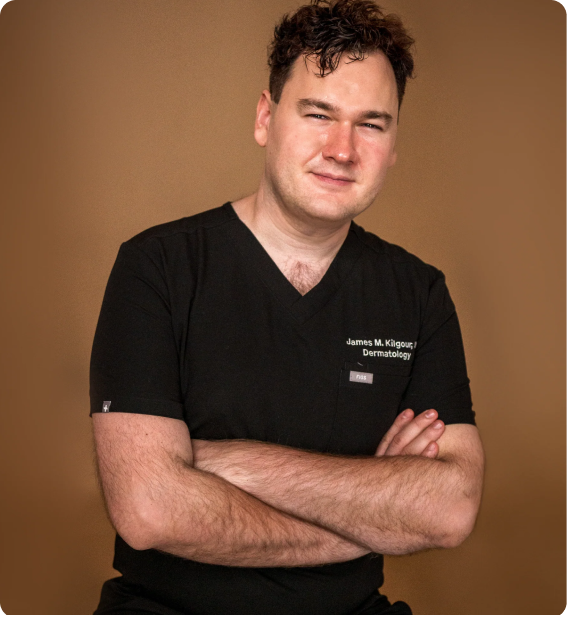
Menopause affects scalp biology too.
As estrogen levels decline, several biological changes begin occurring in scalp tissue:
- Reduced collagen production
- Slower microcirculation
- Increased inflammatory signaling
- Shortened hair growth cycles
The scalp is living tissue. And like all tissue in the body, it ages.
In fact, research shows that during menopause, the scalp can biologically age significantly faster than facial skin — yet most women are only told to focus on the hair itself.
That's the disconnect.
Research shows the scalp ages up to 10x faster than facial skin after menopause — which is why skincare routines don't address hair loss.
You're Not Imagining It.
Most women are told thinning is simply hormonal.
What often goes unexplained is how those hormonal shifts gradually change the biology of the scalp over months and years.
This diagram shows the progression in a clear, clinical way.
Declining estrogen levels begin altering scalp collagen production, circulation, and cellular turnover.
Tissue integrity weakens. Microinflammation increases. The scalp environment becomes less supportive of strong growth.
Hair follicles gradually shrink. Growth cycles shorten. Individual strands become finer and shed more easily.
Hair thinning is the final stage of a process that begins at the scalp.
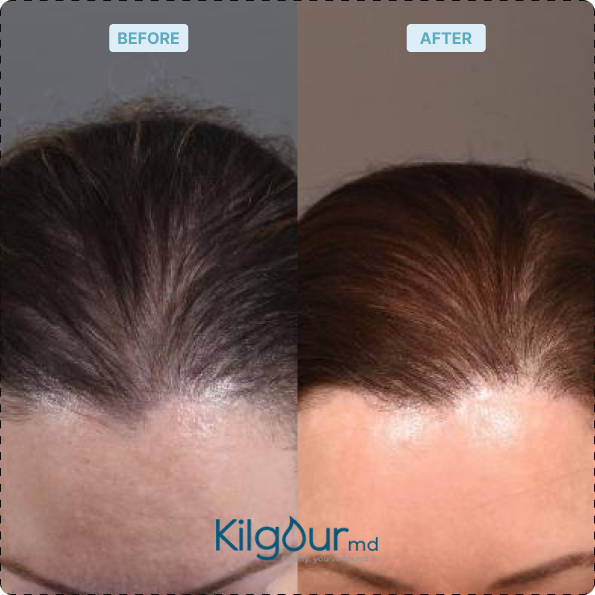
Clinical Results You Can Measure
Independent clinical evaluation of the dual action system developed by KilgourMD
In clinical trials:
Participant with active menopausal hair shedding. Images captured in consistent lighting and positioning. Results reflect average improvement observed in study participants. Individual outcomes may vary.
95 percent reported visible improvement by week 6
Statistically significant reduction in daily shedding was recorded
Increased density along the part line was measured
Improvements continued progressively through month 4

Endorsed by
700+ U.S.
clinicians
Formulated by a
board-certified dermatologist
Patent-pending
minoxidil-free
formula
Clinically Tracked.
Visibly Improved.
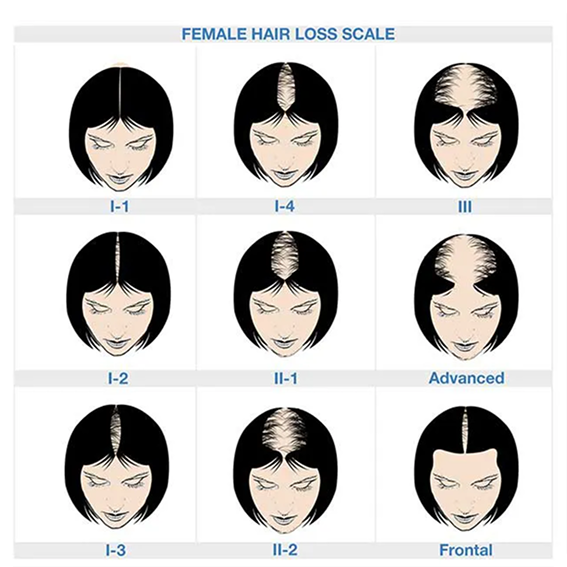
Female Pattern Thinning by Ludwig Stage
The Ludwig Scale is a widely used medical classification system for female pattern hair thinning.
Most menopausal thinning begins subtly at Stage I and progresses gradually over years if unaddressed.
The goal of intervention is to slow or interrupt progression before advanced miniaturization occurs.
A Simple Addition to Your Routine
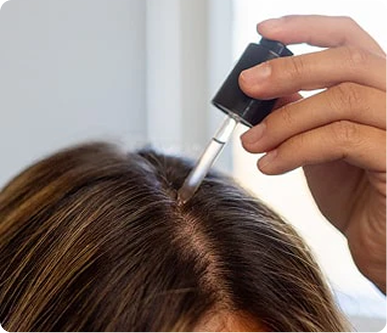
STEP 01
Apply once daily
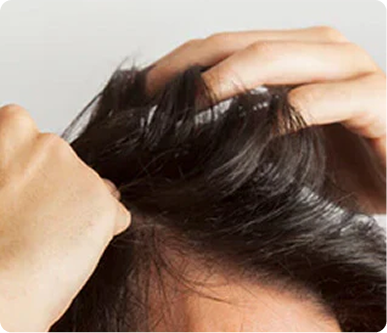
Apply 2 droppers of the Prevention Serum to your scalp daily

STEP 02
Prevention, then treatment
Follow with 2 droppers of the Treatment Serum
STEP 03
Massage in
Massage in gently — no rinsing needed
Takes 30 seconds. Works while you sleep. Most patients notice reduced shedding within 4-6 weeks, with visible regrowth by 90 days.
Where Science Validates Scalp Restoration
Independent research and clinical evaluation supporting the dual action system by KilgourMD
Sterile Clinical Setting
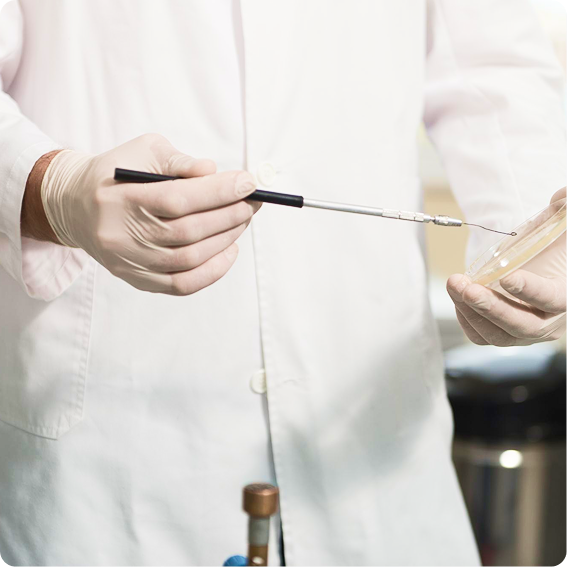
Products were evaluated in controlled laboratory environments to assess stability, absorption, and tissue compatibility.
Hair Collection and Counting
Participants recorded daily shedding counts. Hair samples were analyzed to measure reduction in active shedding over time.
Follicle and Tissue Imaging
High resolution scalp imaging was used to monitor changes in part width, density, and tissue appearance.
The goal was not to create a cosmetic product. The goal was to create a system supported by measurable biological change.
The Timeline of Menopausal Hair Thinning and Recovery
Hair thinning does not happen overnight.
It follows a biological timeline that begins at the tissue level long before visible changes appear.
This simplified graphic shows where intervention makes the greatest difference.
Declining estrogen levels begin altering scalp collagen, circulation, and cellular renewal.
Reduced structural support and increased inflammatory signaling affect follicle stability.
Part line widens. Shedding increases. Strands grow finer and shorter.
The dual action system works to support tissue integrity, reduce shedding, and reinforce healthy growth cycles.
Growth cycles normalize. Visible fullness improves over several months of continued application.
Intervening at the scalp level can
help slow progression and support visible density recovery.
Real Women. Measured Change.
As Featured In


If the Root Cause Is Clear, the Next Move Is Simple
Menopause related thinning is often driven by scalp tissue aging and follicle stress, not permanent follicle loss.
When you focus on supporting the scalp environment directly, you give viable follicles the conditions they need to recover and cycle properly.
This is where structured intervention makes the difference.